
七旬老人让嵩山百节龙舞向世界
The Man Who Made the Dragon Dance Again: A 73-Year Legacy from Songshan to the World

楚天都市报极目新闻记者 赵德龙 实习生 孙逸凡 通讯员 华俊 张颖
By Jimu News Reporter Zhao Delong, Intern Sun Yifan Correspondents: Hua Jun and Zhang Ying Photos by Zhao Delong / Jimu News
翻译:杨永佳 易泉 樊坤铭(湖北大学)
Translator:Yang Yongjia, Yi Quan, Fan Kunming (Hubei University)
2024年12月,随着"春节"被联合国教科文组织列入人类非物质文化遗产代表作名录,源自湖北省鄂州市鄂城区燕矶镇嵩山村的嵩山百节龙,也一同步入世界文化遗产的殿堂。一项村级春节传统年俗活动,如何从后继无人、面临失传的困境,一步步破圈突围、登上世界舞台?
In December 2024, as the Chinese New Year was officially inscribed on UNESCO’s Representative List of the Intangible Cultural Heritage, the Songshan Hundred-Section Dragon — originating from Songshan Village in Yanji Town, Echeng District, Ezhou City, Hubei Province — also gained global recognition as part of humanity’s shared cultural legacy. How did this humble village-level Spring Festival tradition, once on the verge of extinction, gradually break through its boundaries and ascend to the world stage?
 摄影:楚天都市报极目新闻记者 赵德龙
这背后,离不开一位七旬老人矢志不渝的坚守。他叫严基树,40年来,他潜心挖掘、整理并推广嵩山百节龙技艺,不仅守护了珍贵的文化根脉,更巧妙地将这一非遗瑰宝与文旅发展相融合,为其注入时代活力,让古老的龙灯焕发出新的光彩。
Behind this achievement stands the unwavering dedication of a man in his seventies — Yan Jishu. For more than forty years, he has devoted himself to researching, preserving, and promoting the Songshan Hundred-Section Dragon, not only safeguarding its precious cultural heritage but also skillfully integrating it with cultural tourism to give this ancient art new vitality and brilliance.
近日,极目新闻记者走近严基树,揭开他与嵩山百节龙的故事。
Recently, a Jimu News reporter met with Yan Jishu to uncover his story and lifelong bond with the Songshan Hundred-Section Dragon.
消失近40年的百节龙回来了
The Hundred-Section Dragon Returns After Nearly 40 Years
在鄂州市临空经济区,有一个国家级非遗百节龙研发基地。这里是严基树的工作室,也是国家文化和旅游公共政策研究实验基地。
In the Ezhou Airport Economic Zone, there is a national-level research and development base dedicated to the Hundred-Section Dragon. This site serves both as Yan Jishu’s personal studio and as a National Experimental Base for Cultural and Tourism Public Policy Research.
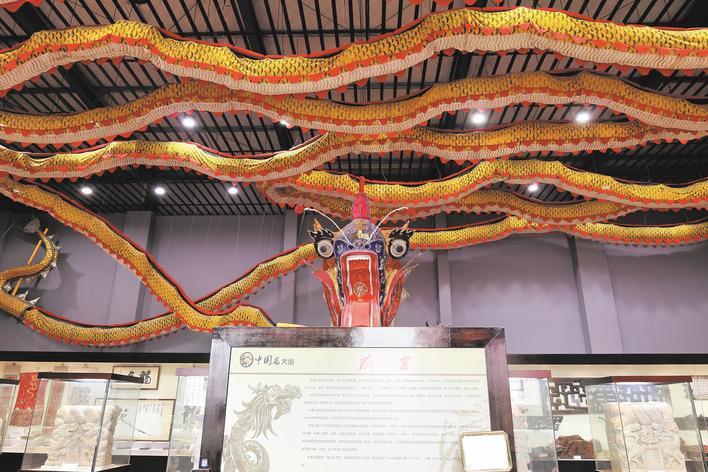
严基树介绍,嵩山百节龙由人工扎制,总长425.58米,其中龙头高6米多、重100余公斤,需数十人轮班才能保持龙头直立行进。嵩山百节龙于明朝天启二年(1622年)首创,至今已历400余年。
According to Yan Jishu, the Songshan Hundred-Section Dragon is entirely handcrafted and measures 425.58 meters in total length. The dragon’s head alone stands over six meters tall and weighs more than 100 kilograms, requiring dozens of performers working in shifts to keep it upright during processions. First created in the second year of the Tianqi reign of the Ming Dynasty (1622), the dragon boasts a history spanning more than four centuries.
这项制作及舞动的传统技艺,却在1947年暂别大众的视野。到了1985年,时任嵩山村党支部书记的严基树,在茶余饭后、田间巷陌,从乡亲们的一声声念叨中,感受到大家对百节龙的怀念。他暗下决心,一定要让这条沉睡的巨龙再次舞动起来!
However, this traditional craft disappeared from public life after 1947. By 1985, when Yan Jishu served as the Party branch secretary of Songshan Village, he often heard villagers nostalgically recall the dragon during casual conversations in the fields and alleys. Deeply moved by their longing, he quietly resolved to awaken the slumbering giant and make it dance once again.
彼时,嵩山百节龙技艺濒临失传,仅少数老人还残存着破碎的记忆。严基树多次拜访这些老人,对百节龙的制作工艺与活动仪式进行抢救性发掘。
At that time, the techniques for crafting and performing the Songshan Hundred-Section Dragon were on the verge of being lost, remembered only in fragments by a few elderly villagers. Yan visited them repeatedly, recording and reconstructing the dragon’s production process and ceremonial traditions before they could vanish completely.
龙灯送福活动包括百节龙扎制、祭祀、开光、巡游、跑风、占卜、化灯等仪式。其中,仅扎制百节龙就需历时4个多月,游龙送福更是需要数百名成年男性共同参与。
The Dragon-Lantern Blessing Festival includes a series of elaborate rituals — from crafting the Hundred-Section Dragon to offering sacrifices, consecration, parades, “running the wind,” divination, and finally the ceremonial burning of the lanterns. Building the dragon alone takes more than four months, while the blessing parade requires the participation of hundreds of adult men.
在严基树的策划、主持下,嵩山百节龙春节、元宵节游乡送福活动持续开展,并不断完善活动的传承谱系与规范仪式,使其成为乡情联系的坚固纽带。
Under Yan Jishu’s direction, the Songshan Hundred-Section Dragon ceremonies — held annually during the Spring Festival and Lantern Festival — have been revived and refined, complete with standardized procedures and a renewed line of cultural transmission. The event has since become a powerful symbol of community and shared heritage.
“每逢春节举办百节龙活动,全村老少都非常踊跃,几乎家家户户都会参加,在外地打拼的乡亲也会赶回来。”严基树说,这条龙,是刻在乡亲心头的厚重年味,是跨越山海也要奔赴的团圆仪式。
“Every Spring Festival, when the Hundred-Section Dragon comes alive, everyone in the village — young and old — joins in with great enthusiasm,” Yan said. “Even those working far from home rush back to take part. For us, this dragon embodies the deep spirit of the New Year — a symbol of reunion that calls people home across mountains and seas.”
捐出自费建起的两座博物馆
Donating Two Self-Funded Museums
2017年,严基树自掏腰包,建起2座博物馆:嵩山百节龙博物馆和嵩山民俗文化博物馆。
In 2017, Yan Jishu spent his own savings to establish two museums — the Songshan Hundred-Section Dragon Museum and the Songshan Folk Culture Museum.
村民们打趣道,别人攒钱给子孙留房产,严基树却攒了一屋子“老宝贝”。百节龙博物馆里,陈列着他耗尽心血收集的1100多件龙文化物品,包括石雕龙、木雕龙、青铜龙、剪纸龙、烟标酒标龙、玉雕龙、陶瓷龙和龙纹钱币、龙纹砚台、龙纹刺绣等,当然更少不了缩小版的百节龙。
Villagers joked that while others save money to buy houses for their children, Yan has filled his with “old treasures.” Inside the museum are more than 1,100 dragon-themed artifacts he has painstakingly collected — including stone, wood, and bronze dragon carvings, paper-cut dragons, dragons on cigarette and liquor labels, jade and ceramic dragons, as well as dragon-patterned coins, inkstones, and embroideries. Of course, a scaled-down version of the Hundred-Section Dragon also takes pride of place.
在许多人眼中,严基树念旧、重情、有担当;但他自己觉得,历史翻腾的浪沙会掩埋珍宝,而他只是沙海拾贝者之一。
To many, Yan is a nostalgic man of great passion and responsibility. But in his own eyes, he is simply a “collector of shells” — one who tries to rescue the treasures that the tides of history might otherwise bury beneath the sands of time.
时针回拨到2016年。鄂州花湖机场建设启动,文物考古和民间文物征集工作时间紧迫,严基树被任命为征迁区文物征集组组长。他骑上摩托车,带着2名帮工,开始了这场与推土机的赛跑。
Rewind to 2016: when construction of Ezhou Huahu Airport began, the archaeological rescue and folk relic collection work was under great time pressure. Yan was appointed head of the relic collection team for the relocation zone. Riding his motorcycle with two helpers, he began what he called “a race against the bulldozers.”
破旧的渔网、废弃的石磨、斑驳的家具……都被他一一拾起收藏。他尤其执着收集每个村湾的牌子,3年下来,收了230多个。“湾子不在了,房子不在了,这些门牌,这些旧家具,存着家的记忆,存着乡愁。”他说。
Worn-out fishing nets, discarded millstones, weathered furniture — Yan salvaged and preserved them all. He was especially determined to collect the name plaques from every hamlet. Over three years, he gathered more than 230 of them. “Even when the villages and houses are gone,” he said, “these nameplates and old pieces of furniture still hold the memory of home and the feeling of belonging.”
他说服族人,腾出严氏宗祠,给这些无处安放的乡愁一个“家”,即嵩山民俗文化博物馆。
He persuaded his clansmen to vacate the Yan Family Ancestral Hall and turned it into a home for these displaced memories — the Songshan Folk Culture Museum.
更令人震动的是,后来他将所有藏品,包括他视若生命的龙文化物品,通过公证方式全部捐赠给了社会。
Even more remarkably, Yan later donated all his collections — including the dragon artifacts he cherished as dearly as his own life — to the public through official notarization.
随着嵩山百节龙的名气越来越大,前来旅游观光、研学的游客日益增多,其影响力也越来越大。2006年,嵩山百节龙被列入鄂州市首批非遗名录,2009年晋升为省级非遗。2020年5月,严基树荣获文旅部“全国乡村文化和旅游能人”称号。2021年,嵩山百节龙成功入选国家级非物质文化遗产代表性项目名录。
As the fame of the Songshan Hundred-Section Dragon grew, tourists began flocking to the village for sightseeing and cultural study. Its influence expanded rapidly — it was listed as one of Ezhou’s first Intangible Cultural Heritage items in 2006, elevated to the provincial level in 2009, and selected as a national-level heritage item in 2021. In May 2020, Yan was named a “National Rural Culture and Tourism Talent” by China’s Ministry of Culture and Tourism.
祠堂中的非遗走进寻常生活
From Ancestral Halls to Everyday Life
如何让非遗走出祠堂、走进生活?这是严基树一直在思考的问题。
How can intangible cultural heritage step out of the ancestral halls and into everyday life? This has been Yan Jishu’s constant question.
百节龙研发基地成立后,严基树团队先后与武汉大学、湖北美院等多所院校合作建设研学基地,共同推动非遗文化的传承与创新。他抓住花湖国际机场落地鄂州的契机,提出了“三大融合”:非遗与乡村旅游深度融合、与乡村治理互促共进、与机场枢纽战略协同发展。
After the establishment of the Hundred-Section Dragon Research and Development Base, Yan’s team collaborated with universities such as Wuhan University and the Hubei Institute of Fine Arts to create research and learning centers that promote both preservation and innovation. Seizing the opportunity brought by the opening of Huahu International Airport in Ezhou, Yan proposed the “Three Integrations”: deeply merging intangible heritage with rural tourism, promoting mutual progress with rural governance, and aligning development with the airport’s strategic expansion.
“花湖国际机场是窗口,嵩山百节龙是请柬,我们要让世界从这里看见中华民族的根。”严基树说。
“Huahu International Airport is our window to the world, and the Songshan Hundred-Section Dragon is our invitation,” Yan said. “We want the world to see the roots of Chinese civilization from here.”
如今,“百节龙路”正式路名获批,民俗文化园完成立项,一条龙形水系将串联古亭、龙井、博物馆与体验区。非遗不再抽象,变得可触可感,成为乡村振兴中深具辨识度的文化地标。
Today, “Hundred-Section Dragon Road” has been officially approved as a street name, and a folk culture park has been planned. A dragon-shaped waterway will connect ancient pavilions, dragon wells, museums, and interactive zones — turning the once-abstract concept of intangible heritage into a tangible, living landmark of rural revitalization.
严基树不仅授徒传艺、出版专著,更开发文创、注册商标,推动嵩山百节龙从年节仪式走向日常产业。
Yan not only teaches apprentices and publishes books but also develops cultural creative products and registers trademarks, transforming the Songshan Hundred-Section Dragon from a seasonal ritual into a thriving cultural industry.
2024年12月,“春节”入选人类非物质文化遗产代表作名录的喜讯传来,严基树守护一生的嵩山百节龙也跃入世界舞台,正式成为人类共同的文化记忆。这一刻,乡土故事汇入了世界的江河。
In December 2024, the joyous news came that the “Chinese New Year” had been included on UNESCO’s Representative List of the Intangible Cultural Heritage. That same year, the Songshan Hundred-Section Dragon — Yan Jishu’s lifelong devotion — also stepped onto the global stage, becoming part of humanity’s collective cultural memory. In that moment, a village story merged into the great river of world civilization.
今年3月,严基树入选第六批国家级非物质文化遗产代表性传承人。面对荣誉,他说:“我最大的愿望,不是留下名字,而是让故事有人听、这条龙有人接。”
In March this year, Yan was named among China’s sixth group of national representative inheritors of intangible cultural heritage. Reflecting on the honor, he said, “My greatest wish is not to have my name remembered, but to ensure the story is heard — and that someone will carry this dragon forward.”
已经73岁的严基树,依然步履不停。他走进学校、社区、企业,将龙的故事一遍遍讲给大家听。
At 73, Yan remains tireless. He visits schools, communities, and companies, telling the story of the dragon again and again.
在他心中,传承不是文化遗产名录上的一行字,而是一盏灯点亮另一盏灯,他要用自己的努力,让嵩山百节龙更好地展现中华文明魅力之姿。
In his heart, heritage is not merely a line in a registry — it is a lamp that lights another. Through his efforts, Yan Jishu hopes to let the Songshan Hundred-Section Dragon shine ever more brightly as a symbol of the enduring charm of Chinese civilization.