

非遗传承人一枝柳条演绎指尖传奇
Inheritor of Intangible Cultural Heritage: A Skilled Craftsman Creates a Weaving Legend
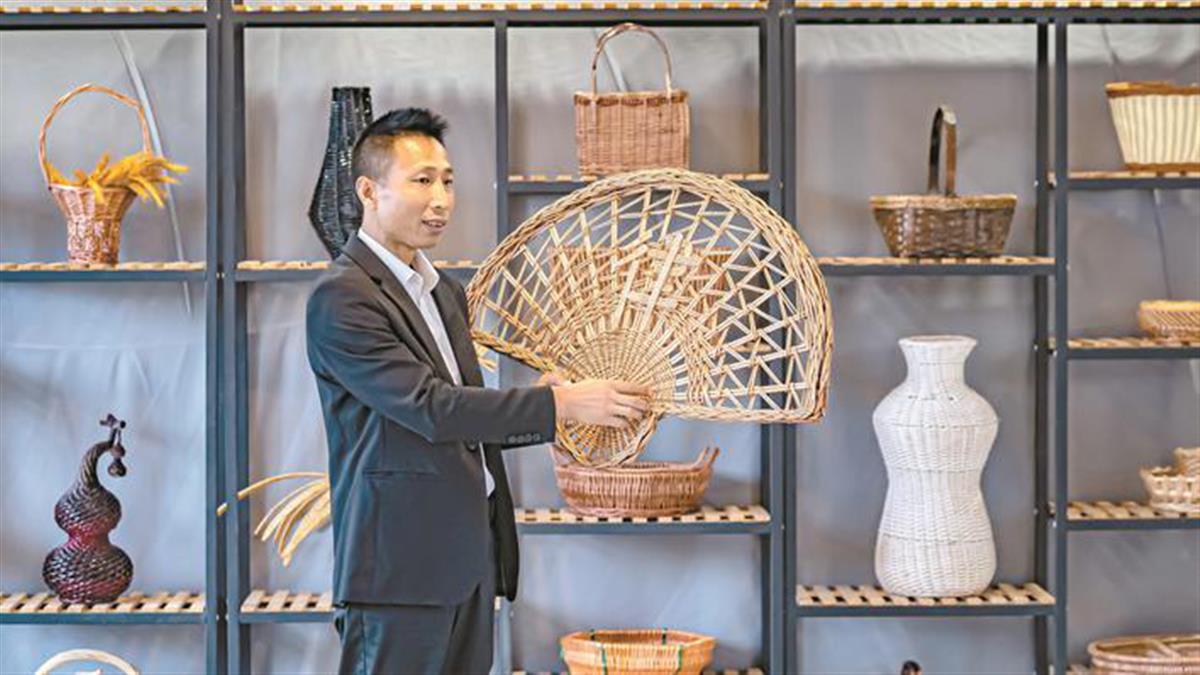
朱德安介绍自己的作品
Zhu De’an was introducing his willow-weaving works.
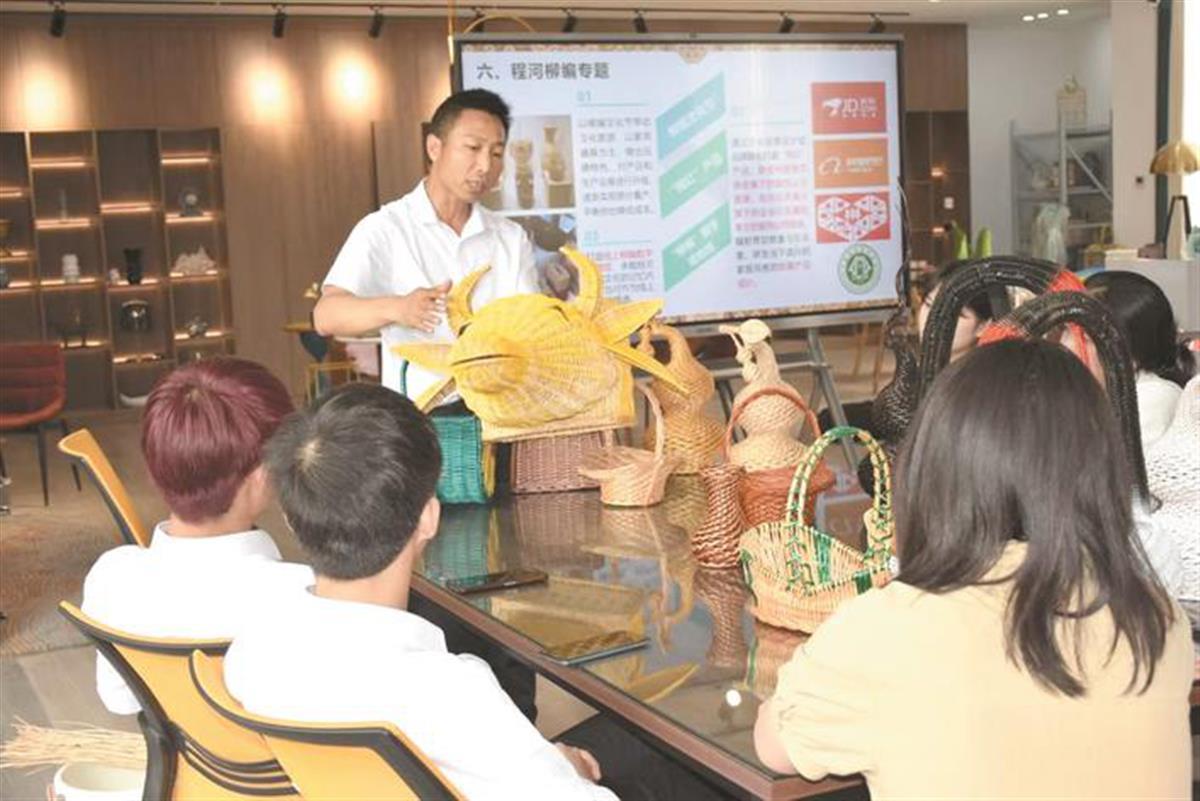
朱德安开展技能培训(通讯员供图)
Zhu De’an was providing willow-weaving training. (Photography by correspondents)
极目新闻记者 周萍英
通讯员 白菲斐 范小青 曹菲
翻译:孔露瑶 田婷婷 尹珩 (湖北大学)
Jimu News Reporter: Zhou Pingying
Correspondents: Bai Feifei, Fan Xiaoqing, Cao Fei
Translators: Kong Luyao, Tian Tingting, Yin Heng (Hubei University)
中国三大柳编出口基地之一的程河镇,位于襄阳市襄州区东北部的夹河套地区,这里独特的地理环境特别适合杞柳的生长。早在300多年前,程河镇的农民就开始用杞柳编织竹篮、簸箕等,程河柳编远近闻名。
Chenghe Town, one of China’s three major export bases of willow-weaving products, is located in the Jiahetao area northeast of Xiangzhou District, Xiangyang City, where the unique geographical environment is particularly suitable for the growth ofSalix integra(a species of willow). As early as 300 years ago, farmers in Chenghe Town began to weave bamboo baskets and dustpans with willowtwigs, earning acclaim for Chenghewillow-weavingproducts both at home and abroad.
10月5日,步入襄阳市襄州区程河镇朱德安大师工作室,满眼都是用杞柳编织的作品。栩栩如生的鸟兽,古色古香的篮筐,精致典雅的折扇,让人眼花缭乱。湖北省第六批省级非遗代表性传承人朱德安静静地坐在一角,专心进行着创作。
On October 5th, as we steppedinto Zhu De’an’s studio in Chenghe Town, Xiangzhou District, Xiangyang City, our gaze was immediately drawn to a room brimming with an exquisite array of willow-woven masterpieces, includinglivelybirds and animals, antique basketsandelegant folding fans. Zhu De’an, the representative inheritor of the sixth batch ofHubeiprovincial intangible cultural heritage, sat quietly in a corner, fully engrossed in his creative work.
细长的柳枝在他指尖翻飞,这边一穿,那边一绕,不一会儿,一个水果篮的底座便已成型。朱德安这才停下手里的活,向极目新闻记者介绍起自己30多年的柳编学习、研发、传承之路。
Slender willow branches fluttered over his fingertips, threading one side and winding the other.Soon the base of a fruit basket was formed. It is only then that Mr. Zhu stopped his work and shared withthe JimuNews reportershis 30 plus yearsof studying, researching, and preserving the art of willow weaving.
“编织用的柳条不是一般的杨柳树的枝条。”朱德安说,杞柳是一种长在地里的农作物,主要品种有大白皮、红皮柳和青皮柳等。收割后进行高温蒸、剥皮、晾晒等工序,编织前再用水泡软即可。
“The wickerused for weaving is not thebranch of anordinary willow tree.”Zhu explainedthat Salix integrais a kind of willowthat grows in the ground. The main varieties are large white bark, red bark willow and green bark willow. Following harvest, it is steamed, peeled, dried among other processes.Beforebeing used forweaving, it is softened by soaking in water.
1974年出生的朱德安,生长在一个四代传承的柳编之家,打从记事起,他就跟着爷爷奶奶、爸爸妈妈在家用杞柳编织日常用品。初中毕业后,朱德安在家从事了几年柳编工作,于1995年前往广东某柳编公司打工。“感觉常规的柳编技艺都已熟练掌握,想去外面学习和提升。”
Born in 1974, Zhu De’an grew up in a family with a tradition of willow weavingspanning four generations. From his earliest memories, he worked with his grandparents and parentsinweavingeveryday items. After completing junior high school, Zhu De’an spent several years working on willow weaving at home. In 1995, he left forGuangdong and began to work at a willow craftcompany. “I feltthat I had already mastered the foundationaltechniques, so I wanted tofurther learn and improvemy skills away from home.” he explained.
之后,朱德安开始专注于工艺品的样品开发。“第一个挑战的柳编制品是‘龙’,它是我们中国人的象征。”朱德安介绍,他对着龙的图纸,思考着形状、大小和从哪里下手编织,一件作品编了拆,拆了编,折腾了一个月,朱德安终于琢磨出了工艺品的编织技巧,随后,龙形果盘、龙形灯具广受好评,订单量大增。
Later, Zhu De’anbegan focusing on developing samples of willowhandicrafts. “The first willow weaving product I tried was a ‘dragon’, which symbolizesus Chinesepeople,” Zhu De’an said. Looking at a drawing of a dragon, he pondered over its shape, size, and where he would beginweaving. He then spent a month crafting a piece, dismantling and reconstructing it until he finally perfected his techniques.Subsequently, hisdragon-shaped fruit trays and lamps received widespread popularity, leading to a significant increase in orders.
1997年,学艺归来的朱德安发现,家乡遍地都是柳条,村里家家户户都学柳编,几乎人人都会编织,于是,他开始利用资源,与山东某工艺品公司合作,组织村民在家编织果盘、篮筐,每年能帮助村民增加收入。
In 1997,upon returninghome with improvedtechniques, Zhu De’an soondiscovered that willow twigs were commonplace in his villageas nearly every household could weave. Zhu De’an decided to fully utilize thisresource bycollaboratingwith a handicraft company in Shandong and encouragingvillagers to weave fruit trays and basketsat home. His efforts resulted in the villagers experiencing a great increase in their annual income.
近年来,随着人们物质生活水平的提高,柳编也逐渐从实用性转向艺术性,朱德安也开始探索着提高村民的技艺。他先后组织周边村民开展培训20余次,用新理念、新技术、新方法让程河柳编产品更符合现代人的审美和市场需求。如今,程河柳编逐渐发展到6大类编法、400多个系列、12000多个花色品种。其中,独特的穿编技法,编织出的产品立体感强、外形匀称且美观,广受市场青睐。
Over recent years, as living standardshave improved, willow-weaving products have acquired a more artistic functionin contrast to their practical use. Inspired by this shift, Zhu De’an began exploring ways to improve the skills of the villagers. He organized more than 20 training sessions for surrounding villagers, employing new ideas, techniques, and methods to bring Chenghe willow products up to date with the aesthetics and market demands of modern consumers. To date, Chenghe willow weaving has six major weaving patterns, over 400 series, and more than 12,000 pattern varieties. Among them, the unique under-and-over weavingtechnique results in items that are bothwell-proportioned and aesthetic, as well as realistic-looking, making them highly popular on the market.
2017年,心怀桑梓之情的朱德安在家乡注册成立襄阳市襄州区聚通果木种植专业合作社,带领村民致富奔小康。崔营村的残疾人朱春杰走路不方便,朱德安将柳编技艺倾囊相授。“在家种植杞柳加上做柳编,每年增收2万多元不成问题。”朱春杰对现在的生活很是满意。
In 2017, driven by a deep love for his hometown, Zhu De’an registered and established the Jutong Fruitwood Planting Cooperative in Xiangzhou District, Xiangyang City, whichin turn is improving the livelihood of the villagers. Zhu Chunjie, aphysically challenged individual who hasdifficulty walking, was taught willow weaving skills by Zhu De’an.Zhu Chunjie, whois now highly satisfied with his life,exclaimed “Seeing anincrease of over 20,000 yuan in one’syearly income as a result of planting Salix integra and weaving willow productsis definitely possible.” Zhu Chunjie said.
目前,程河镇拥有杞柳种植示范基地150亩,柳编产品远销欧美、韩国、马来西亚、新加坡等30多个国家和地区,整个程河镇的柳编产业年产值达2亿元,年出口创汇500万美元,带动2000多人从事柳编产业。
Currently, Chenghe Town has a demonstrative base ofSalix integra planting, covering an area of 150 mu. Its willow products have been exported to the US and Europe, South Korea, Malaysia, Singapore and more than 30 countries and regions. The entire Chenghe Town’s willow weaving industry has an annual output value of 200 million yuan, generating an annual export revenue of 5 million US dollars and providing employment for over 2,000 people in the willow weaving industry.
“今年国庆后,湖北轻工职业技术学院300多名学生将来程河镇进行为期一周的研学。”朱德安告诉极目新闻记者,下一步,他将把工作重心放在程河柳编技艺的传承上。“除了与高校合作开展研学教育外,还将出版柳编技艺书籍和教材,让这门非遗技艺得到更好的推广和传承。”
“After the National Day holidaythis year, over 300 students from Hubei Light Industry Technology Institute will visit Chenghe for a week-long research and study project.” Zhu told the reporters that his next step wouldfocus efforts on the inheritance of Chenghe willow weaving skills. “Except for developing education program with colleges, I will also publish books and textbooks about willow-weaving,ensuring that this intangible cultural heritage can be more effectively promoted and passed on.”