

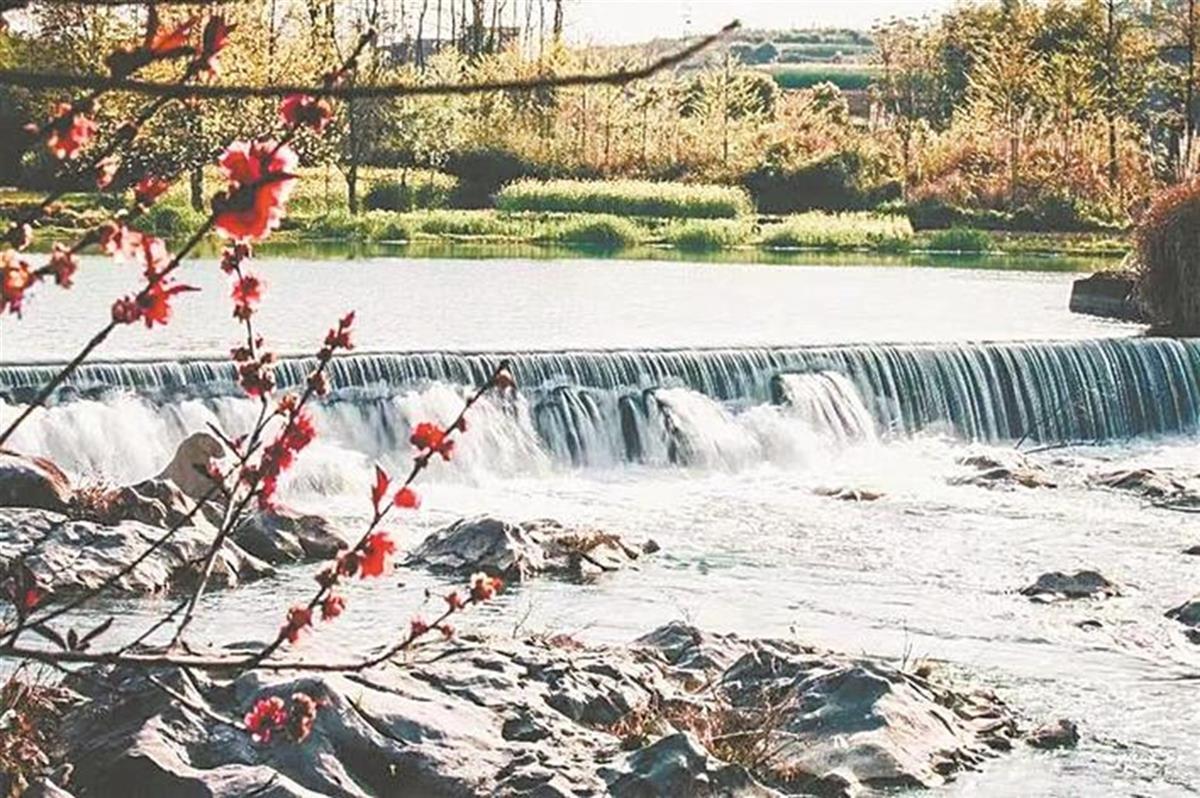
白霓古堰至今仍发挥着灌溉、防洪、抗旱、供水等多方面功能Even today, the Baini Ancient Weir continues serving multiple functions such as irrigation, flood control, drought resistance, and water supply
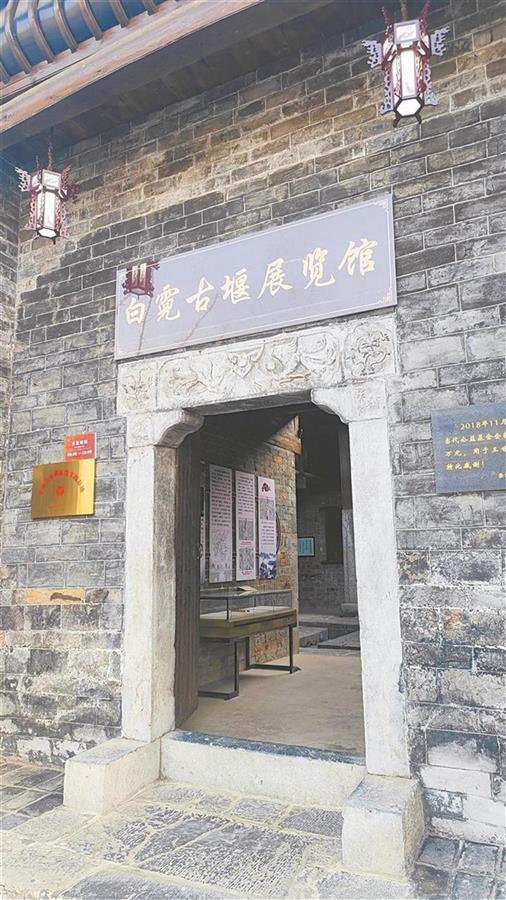
白霓古堰展览馆The Exhibition Hall of the Baini Ancient Weir
楚天都市报极目新闻记者 成昱勋
通讯员 饶青才 汪佳 涂林涛 王庆明
JIMU News Reporter: Yuxun Cheng
Correspondents: Qingcai Rao, Jia Wang, Lintao Xu, Qingming Wang
译者:吴华珊、宋天硕、卫拉(湖北大学)
Translators:Huashan Wu, Tianshuo Song, LisaM.K (Hubei University)
古堰悠悠今犹在,不见当年修渠人。在咸宁市崇阳县白霓镇境内,保留着两处古代水利遗址。千百年来,先辈们筑堰引水灌田、防洪抗旱,留下了战天斗地、造福后人的历史印迹。
The ancient weir still stands tall, even after those who constructed the channel are long gone. Within Baini town in Chongyang county, Xianning city, two ancient water conservancy sites have been preserved. For thousands of years, our ancestors built weirs to divert water for irrigation, flood control, and drought resistance, leaving a historical imprint of battling against natural disasters and benefitting future generations.
崇阳位于崇山峻岭之间,水系发达,河流纵横,共有大小河港51条,长江中游右岸一级支流陆水河在境内全长67公里。崇阳塘堰众多,1950年全县有塘堰近1万处,其中堰有1000余座,1985年仍有901座,有“百堰之乡”美称。
Chongyang is located between towering mountains, with a well-developed water system and numerous rivers and ports, including 51 ports. The Lushui River, a primary right-bank tributary of the Yangtze River in the middle reaches, runs for 67 kilometers within the county. There are many ancient ponds and weirs in Chongyang, with nearly 10,000 weirs and over 1,000 dams in the county in 1950. In 1985, there were still 901 dams, thus earning its nickname “the land of a hundred weirs.”
4月17日,中国国家灌排委员会正式公布《2023年度世界灌溉工程遗产中国候选工程名单》,经专家评审和中国国家灌溉排水委员会主席团研究批准,湖北崇阳白霓古堰等四项工程入选2023年度世界灌溉工程遗产中国候选工程名单。
On April 17th, the Chinese National Committee on Irrigation and Drainage officially announced the list of Chinese projects nominated for the World Irrigation Engineering Heritage Sites for the year 2023. After expert evaluation and approval by the chairperson of the Chinese National Committee on Irrigation and Drainage, four projects, including the Baini Ancient Weir in Chongyang, Hubei, were included in the list.
一部治水史 一部崇阳发展史
A History of Water Management is a History of Chongyangs Development
崇阳县白霓古堰包括石枧堰和远陂堰,位于咸宁市崇阳县白霓镇,属于长江流域陆水水系。该古堰据现有史料建于五代后唐时期(约公元931年),距今已有近1100年历史。历经多次修葺,古堰至今仍发挥着灌溉、防洪、抗旱、供水等多方面功能,灌溉面积约3.5万亩,是我国古代大规模砌石结构水利工程的典型代表。
Baini Ancient Weir in Chongyang County, which includes Shisan Weir and Yuanpi Weir, is located in Baini Town, Chongyang County, Xianning City, and belongs to the Lu-Shui River system in the Yangtze River Basin. According to existing historical records, the ancient dam was built in the post-Tang Dynasty of the Five Dynasties (around 931 AD), and it has a history of nearly 1,100 years. After many repairs, the ancient dam still plays a role in irrigation, flood control, drought resistance, and water supply. The irrigation area is about 35,000 mu, a typical representative of large-scale masonry water conservancy projects in ancient China.
千百年间,崇阳县高堤河、大市河的潺潺流水、古堰沟渠,浸润着广袤的农田,哺育着勤劳质朴的人民。“一部治水史,一部崇阳发展史。”崇阳县水利局退休干部胡焕文介绍,白霓古堰不仅至今还保留着灌溉农田的基本功能,如今还成为集生态补水与景观休闲为一体的生态堰、环保堰、旅游堰。
Over thousands of years, the murmuring waters of Gao Di River and Da Shi River, and the canals and ditches of ancient dams and weirs in Chongyang County have nurtured vast farmland and hardworking and good-hearted people. “A history of water management is a history of Chongyangs development.” Huanwen Hu, a retired cadre of the Chongyang County Water Conservancy Bureau, said that the Baini Ancient Weir not only retained its basic function of irrigating farmland to this day but has also evolved into an ecological, environmental protection, and tourist dam, integrating ecological water supplementation with scenic leisure.
4月20日,极目新闻记者实地探访看到,在古堰所在区域,有许多与水有关的古建筑、古遗址,如白霓桥、白霓明清古街区等,这些遗迹不仅整体提升了白霓镇历史文化内涵,白霓镇也因此成为了湖北省历史文化名镇。
On April 20th, a journalist from Jimu News visited the area where the ancient weir is located and found various ancient buildings and sites related to water, such as the Baini Bridge and the Baini Ming-Qing Dynasty Ancient Street. These relics not only add to the historical and cultural connotations of Baini town as a whole, but also to its reputation as a historical and cultural town in Hubei province.
近年来,古堰因其悠久历史和优美景观,成为灌区的一道生态名片。石枧堰渠首所在的白霓镇油市村依托古堰,打造了小自然田园综合体,被评为“湖北省旅游名村”“宜居村庄”,入选全国1000个“最美乡村”。
In recent years, the ancient dam has become an ecological business card for the irrigation area owing to its long history and beautiful landscape. In Youshi village, Baini Town, where the head of the Shijian Dam is located, a small natural rural complex has been created that relies on the ancient dam. It has been rated as a “tourist village in Hubei Province”, “livable village”, as well as one of the “most beautiful villages in China” among 1000 villages.
2020年,崇阳县启动白霓古堰工程申报世界灌溉工程遗产工作,成立了由崇阳县政府主要领导任组长的申遗工作领导小组,聘请中国水利水电科学研究院专家张伟兵等人到白霓古堰现场查勘指导,并编写完善申报材料。
In 2020, Chongyang County initiated the application for the Baini Ancient Weir project to be listed as a World Irrigation Heritage Site. A leading group for the application work was established with the main leaders of Chongyang County local administration serving as the group leader. Experts from the China Institute of Water Resources and Hydropower Research, such as Weibing Zhang, were invited to the site to conduct investigations and provide guidance, as well as to complete and improve the application materials.
千年古堰 至今依然发挥作用
Millennium-old ancient weir is still in use today
据清雍正三年《重修石枧堰碑》记载,“后唐长兴二年(公元931年),知县陈公修陂(石枧堰),以木为之,然不逾数年,木朽陂坏。”说明该古堰在公元931年(后唐长兴二年)已经整修过,始建年代当更早,距今已有近1100年。另明代嘉靖《湖广图经志书》卷二“武昌府”记载,在南宋宝庆(1225-1227年)初年,该古堰也曾重修过,也说明在此之前该古堰已经存在。
According to the inscription on the “Reconstruction of Shijian Weir Monument” in the third year of the Qing Dynastys Yongzheng period, “In the second year of the Changxing period of the Later Tang Dynasty (931 AD), County Magistrate Gongxiu Chen built the weir (Shijian Weir) with wood, but it collapsed a few years later due to rotting.” This indicates that the ancient weir was repaired in 931 AD (the second year of the Changxing period of the Later Tang Dynasty), and the actual construction date is even earlier, giving it a history of nearly 1100 years. The “Huguang Map and Gazetteer” of the Ming Dynasty Jiajing period also recorded that in the early years of the Southern Song Dynasty Baoqing period (1225-1227), the ancient weir was also rebuilt, which implies that the ancient weir existed before that time.
“乘势利导,因时制宜”,看似普通的白霓古堰背后,也正是其设计最精巧之处。石枧堰渠首枢纽在堰体底部,创造性设计了独特的泄洪排沙底孔,孔口横断面呈矩形,宽约1.5米,高2米,孔口设有闸门,方便开启。
“Make the most of the situation and adapt to the times”. Behind the seemingly ordinary Baini Ancient Dam is the most ingenious design. The hub of the Shijian Irrigation Canal is located at the bottom of the dam body, and a unique bottom drainage hole for flood discharge and sediment removal has been creatively designed. The cross-section of the hole reveals a rectangular shape, about 1.5 meters wide and 2 meters high, with a gate for easy opening.
泄洪排沙底孔的设置,最早主要在汛末开启底孔泄流,降低堰上水位以便检修维护堰体。同时,泄流时底孔排沙,能排出坝前淤积的泥沙,泄洪排沙底孔的设计和运用使得石枧堰安全稳固运行1000余年而不淤废,至今仍保留较大的库容。
In the past, the setting of the bottom hole for flood discharge and sediment removal was mainly used to lower the water level in the weir for inspection and maintenance purposes. At the same time, when discharging water through the bottom hole, the sediment in front of the dam could also be removed. The design and use of the bottom drainage hole for flood discharge and sediment removal has enabled the Shijian Weir to operate safely and steadily for more than 1000 years without silting up, while still retaining a large reservoir capacity.
这一设计在古代堰坝建筑中很罕见,是白霓古堰科技价值的主要体现。古堰选址科学,条石和地基以铁栓铁锭稳固,并灌入石灰,因而得以保持坚固,体现了河水治理之“道”、科学作为之“术”、文明文化之“器”。
This design is rare in ancient dam construction and is the main embodiment of the technological value of the Baini Ancient Weir. The site selection of the ancient weir was scientific, and the stones and foundations were secured with iron bolts and ingots, and filled with lime, thus maintaining its firmness. This reflects the “Dao” of river management, the “Art” of scientific approach, and the “Instrument” of civilization and culture.
据了解,2020年、2021年,崇阳县连续两年申遗,评选结果分别为全国第七名、第五名。2022年10月,崇阳县第三次申遗,今年3月,国家灌溉排水委员会组织专家到白霓古堰现场评估,最终,湖北崇阳白霓古堰跻身第四名,成功入围2023年度世界灌溉工程遗产中国候选工程名单。
According to reports, Chongyang County applied for the World Irrigation Heritage Site for two consecutive years in 2020 and 2021, ranking seventh and fifth in China respectively. In October 2022, Chongyang County applied for the third time. In March this year, the National Irrigation and Drainage Committee organized experts to evaluate the site of the Baini Ancient Weir, and finally, it was ranked fourth, thus successfully being enlisted among the candidates for the 2023 World Irrigation Heritage Site in China.
多次修整 现成为网红打卡地
Gaining Online Fame Following Numerous Renovations
走进白霓古堰展览馆,古堰的“前世今生”逐渐浮现在人们眼前,展馆不仅详尽介绍了古堰的科技价值、社会经济价值及历史文化价值,还从管理与保护上详细揭秘了千年古堰何以沿用至今。
Entering the exhibition hall of the Baini Ancient Weir, the “past and present” of the ancient weir gradually emerge before ones eyes. The exhibition hall not only gives a detailed introduction to the technological value, socio-economic value, and historical and cultural value of the ancient weir but also reveals in detail the management and protection of the thousand-year-old ancient weir, which explains why it has been used up to now.
崇阳县白霓镇党委书记谭其军告诉极目新闻记者,每两年镇政府会牵头组织沿线村具体负责在汛期前清理泄洪排沙底孔、更换闸门,并在每年春耕前清修渠道。历经多次修葺,白霓古堰至今仍发挥着灌溉、防洪、抗旱、供水等多方面功能,实现了工程可持续利用。
Mr. Tan Qijun, Secretary of the Baini Township Committee in Chongyang County, told Jimu News reporters that every two years, the town government will take the lead in organizing the specific responsibility of the villages along the line to clean up the bottom drainage holes for flood discharge and sand removal before the flood season, replace the gates, and repair the channel before fields are plowed in spring each year. After many repairs, the Baini Ancient Dam still plays a role in irrigation, flood control, drought resistance, water supply, and other aspects, achieving the projects long-term and sustainable use.
一方水土养一方人。为更好保护古堰,白霓镇政府还成立了白霓古堰灌溉工程管理与保护工作领导小组,并配备了专职管理人员,明确河库长和堰长,对古堰进行日常管理维护。
Ones livelihood is closely linked with the local environment. In order to better protect the ancient dam, the government of Baini town has established a leading group for the management and protection of the ancient Baini irrigation project, and equipped it with dedicated management personnel. The positions of river and reservoir chiefs have been established to carry out daily management and maintenance of the ancient dam.
20世纪50年代以来,崇阳县及白霓镇政府对古堰进行了多次整修,灌区范围进一步扩大,较历史上灌溉面积扩大2-3倍。石枧堰于2002年被湖北省人民政府确定为省级文物保护单位,远陂堰2012年被确立为崇阳县文物保护单位。
Since the 1950s, the government of Chongyang County and Baini town have carried out multiple renovations of the ancient dam. The irrigation area has been further expanded, reaching 2-3 times the historical irrigation area. In 2002, Shijian Weir was designated as a provincial-level cultural relic protection unit by the Hubei Provincial Peoples Government, and Yuanbi Weir was established as a cultural relic protection unit of Chongyang County in 2012.
时至四月,日光渐盛,市民游客开始玩水露营享受清凉。水从古堰流下,积成白色的瀑布,轰鸣有声,激越如歌。河水绿如翡翠,微波粼粼,古堰湾俨然而立,别有风光。站在岸边,掬一捧清水,驱散难耐的夏天热气,逐渐成为独属于这里的“夏日专享”。
As April arrives and the weather gets warmer, residents and tourists alike have started to engage in more outdoor activities to enjoy the pleasant weather. The water cascades down from the ancient dam, forming a white waterfall, roaring and singing vigorously. The river water is as green as jade, with rippling waves, and this ancient dam bay stands majestically, showing its unique scenery. Standing on the bank and scooping up a handful of clear water can dispel the unbearable summer heat, which has gradually become a “summer exclusive” here.
(通讯员供图)
(Photo provided by the correspondent)